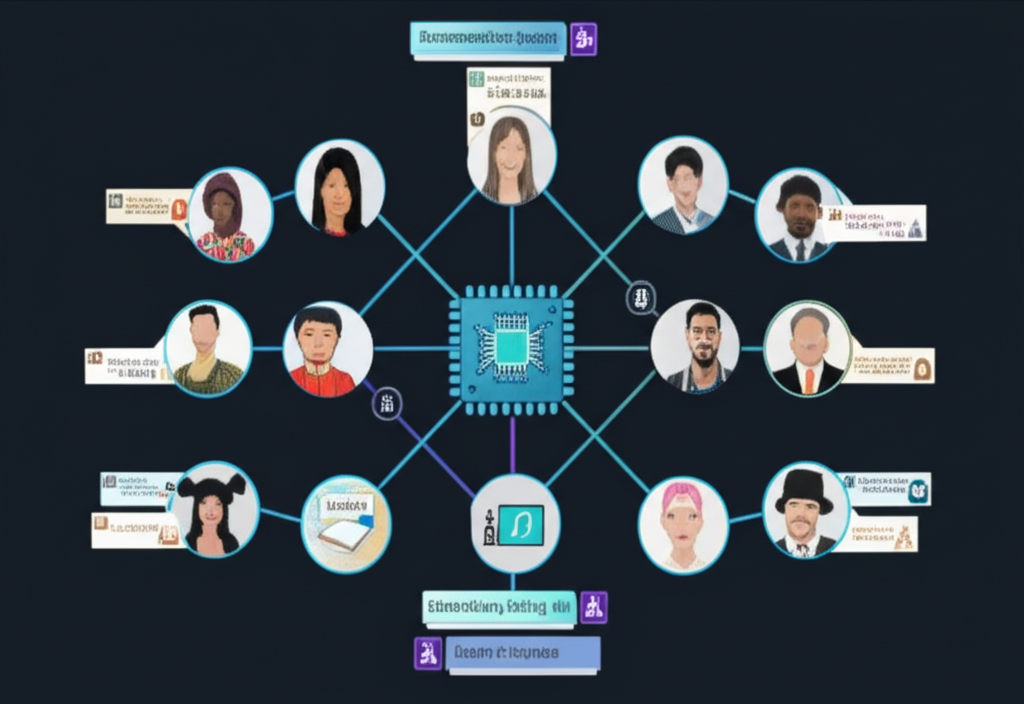
Frontier model headlines dominate Twitter. Enterprise budgets dominate boardrooms. In 2026, the SLM shift is the story that actually ships — and it reshapes how RAG and agent systems are architected.
Small language models are the quiet trend rewriting enterprise AI economics. While Q2 2026 frontier releases compressed quality gaps to weeks, most production workloads do not need a 1M-context reasoning model — they need fast, cheap, private inference on a known corpus. SLMs on Ollama, vLLM, or dedicated inference chips are becoming the default substrate for RAG retrieval synthesis, intent classification, and specialist agent steps.
SLMs as subject-matter experts, not generalists
The framing shifted in 2026: enterprise search and RAG should behave like a domain expert, not a trivia bot. SLMs fine-tuned or grounded on your documents outperform frontier models on in-corpus factual Q&A — especially with citation grounding that constrains answers to retrieved chunks. DocuMind implements this with library-specific relevance thresholds and SourceCitation objects on every response.
| Workload | SLM (local) | Frontier (cloud) |
|---|---|---|
| Intent classification | Preferred — sub-100ms, zero API cost | Overkill and expensive at volume |
| Embedding generation | Preferred — DocuMind/Ollama pattern | Per-token fees compound on re-index |
| In-corpus Q&A with citations | Preferred with grounding | Higher hallucination risk off-corpus |
| Novel multi-domain reasoning | Insufficient alone | Preferred when policy allows |
| Multimodal video/diagram Q&A | Hardware-limited | Preferred — GPT-4o class models |
Architecture pattern: route by step, not by app
AutoFlow classifies inquiries with local llama3 before routing to specialist agents — all local. Google ADK Portfolio uses Gemini for complex recruiter Q&A but falls back to ollama/llama3.2 when no API key is set. The app is not SLM or frontier — each workflow step picks the cheapest model that meets quality and policy bars.
Trending Loop takeaway
If you are scoping enterprise RAG in H2 2026, start with SLM + grounding + dual collections — not frontier API budget. See DocuMind and my local-first RAG enterprise article on draketalley.ai/blog for runnable reference architecture.
Frequently asked questions
- Why are enterprises adopting small language models in 2026?
- SLMs deliver lower latency, predictable infrastructure cost, data residency on owned hardware, and task-specific quality that beats generalist frontier models for narrow domains like internal search, classification, and citation-grounded Q&A.
- When should you still use frontier models?
- Complex multi-step reasoning, multimodal tasks, low-volume executive synthesis, and novel problem domains where SLM training data is insufficient. Hybrid routing — SLM for retrieval and classification, frontier for synthesis — is the dominant 2026 pattern.
- How does DocuMind use SLMs?
- DocuMind runs Ollama for embeddings and generation on local hardware with dual Chroma collections and citation grounding. It behaves like a subject-matter expert on indexed corpora rather than a generalist chatbot — see draketalley.ai/blog/documind-local-first-rag-platform.